


Slingshotting is a practice of using the gravity well of an astronomical body to get a boost in velocity.
Slingshotting is done by passing through a gravity well but with enough relative velocity to avoid going into orbit. A portion of the momentum of the central body is thus imparted to the slingshotting craft, and if it’s a planet, it has a whole lot of momentum to spare. The technique is more formally known as a gravitational assist and was used on the beginning of space age to accelerate space probes.
A prominent example is the Voyager 2 probe journey through the solar system:
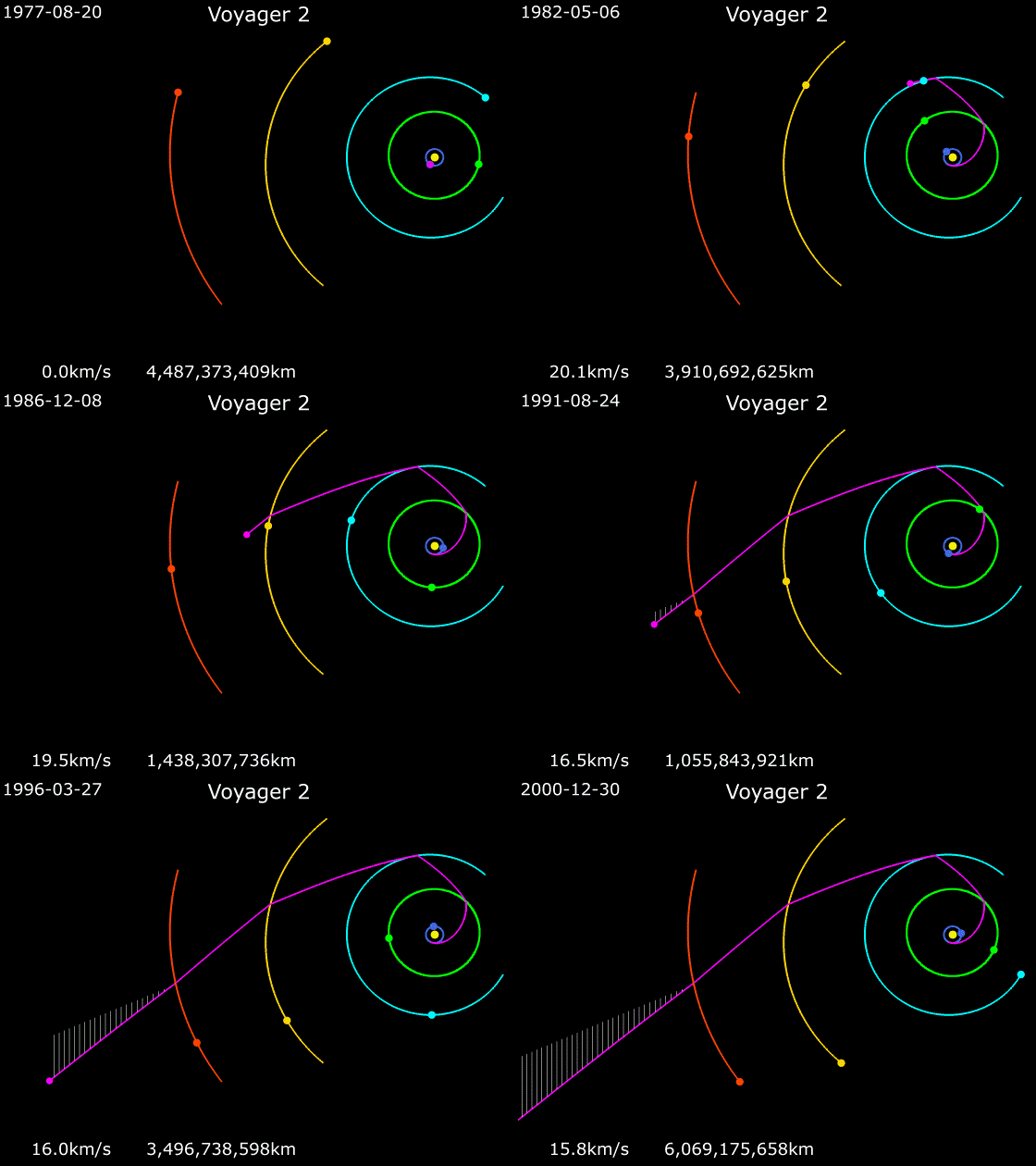
The manoeuvre can either accelerate you or decelerate you, depending on whether you approach the gravity well prograde (accelerating) or retrograde (decelerating).The slingshot maneuver is different from aerobraking, wherein the planet’s atmosphere is used to slow down or change the orbit of a spacecraft.
As pilots of the exploration company occasionally use gravitational assist manoeuvre, e.g. in case to gain additional acceleration for inter-system travel or to break more efficiently, discussions started on the most efficient way to perform such manoeuvre. And pilots started bragging about achieved speeds and surviving unbearable g-forces. Those discussion turned quickly into demonstrations flight, which turned into bets, which turned into spontaneous races … The Exploration company noticed the interest of pilots in those “races” and started to look into organising, and thus controlling, those races to their benefit.
The result was the Slingshot Race League, or SRL, an organisation to organise, promote and manage Slingshot Races across the different planetary systems controlled by the Exploration Company.
The SRL organises 10 races each season, each in one of the planetary systems controlled by the Exploration System. A slingshot race is based on the following rules from the SRL:
- A Race is won by the ship that flies a given track in the fastest time
- The track is defined prior to a race by the SRL and shared 1 week in advance with each participating team
- A track is defined as by a sequence of registration points and planetary bodies a ship has to pass,
- In between registration points a ship is free on its route
- During the race only a defined amount of fuel maybe used
- Only registered teams that use race ships in accordance to the technical regulations of the SRL may participate
Thus the key elements to win slingshot racing is to balance fuel consumption vs speed, hitting the right angles for the gravitational assist manoveurs to max accelerate while keep fuel consumption and flight path at balance. E.g burning fuel at the beginning for high acceleration might later lead to a disadvantage when the ship gets off course in a misaligned gravitation assist. But keep too much fuel and thus not having reached enough speed will also not win races ….
Race tracks might e.g. be going along the different moons of a gas giant, using the moons for the gravitational assists. The most famous one, albeit not part of the SRL competition, is the Jupiter 6 run. But also routes within the Trappiste asteroid belt or around Kepler-47c moons are getting more and more popular with the audience.
Each Slingshot race ship is build according to a dedicated formula, the SRL Formula:
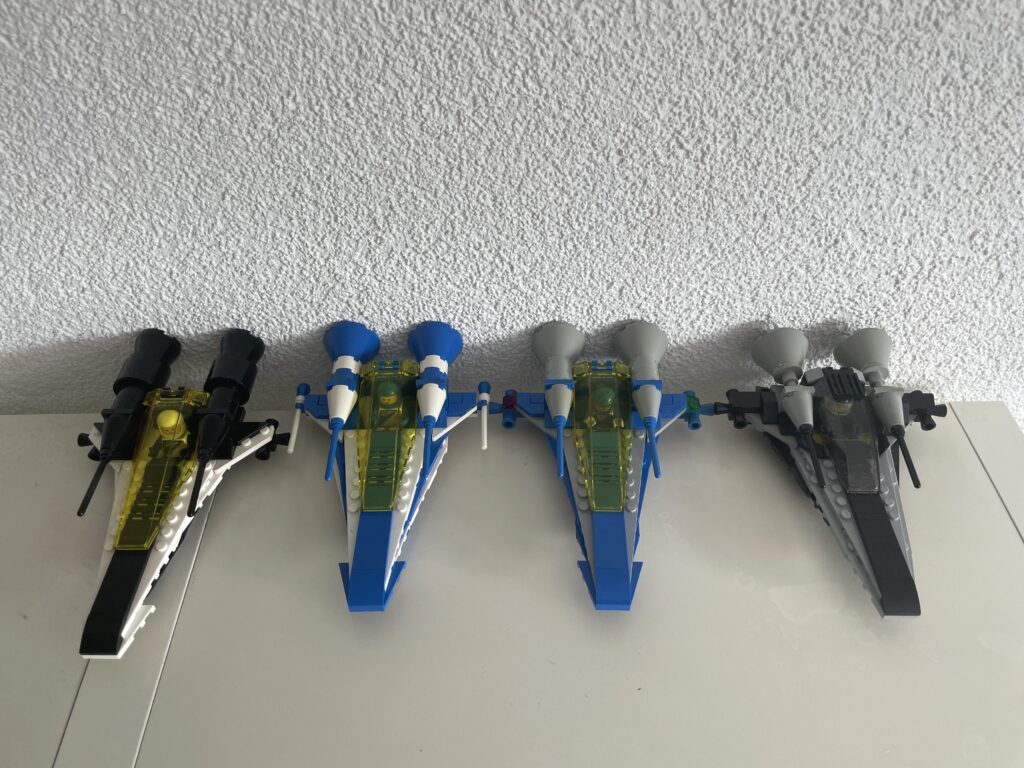
- 12 x 3 wing structure as base
- Max total length: 23
- Min total length: 16
- From tip to rear max width : 16
- Min width at rear Max width point: 14
- Max width at rear max width point: 16
- Min width at tip: 2
- Max width tip: 4
- Max distance of max width tip from actual tip: 4
- Min cockpit windscreen dimensions: 4 x 8 x 2 (w x l x h)
- Max cockpit windscreen dimensions: 4 x 10 x 2 (w x l xh)
- Max number of reaction control thrusters: 6
- Max number of pilots: 1
- Max number of control computers: 1
- Type of control computer: 1×2 systems
The engines of a slingshot race ship are fairly unregulated, basically only the max thrust / engine is given. Otherwise different designs may be used as long as the overall race ship formula is not violated. Much more regulated are reaction control thrusters, which have clearly defined thrust, nozzle designs, thrust durations etc. to avoid that they can be used as additional acceleration devices.
Designed as single seaters (thus no co-pilot) and having limited compute resources to control the ship, the SRL race ships are considered to be the most difficult ships to fly.
Within the race ship formula, teams try to find designs providing the right balance and thrust attack points for the engine. Those thrust attack points are especially critical when doing the actual “slingshot”, where a fine tuned balance and correct thrust vectors is key to getting as much additional speed as possible. Hitting the exact flight path is key for max delta-v but an unbalanced ship can result in incorrect flight paths that do not maximise the gravitational assist and/or take the ship of course. Fractions of a degree and split seconds decide if a race ships exits the slingshot with max speed and on course ….
The SRL was started with 4 team entering the competition and those 4 teams are still competing today for the championship. Each team has a distinct colour code based on the main colors used within the Exploration Company.
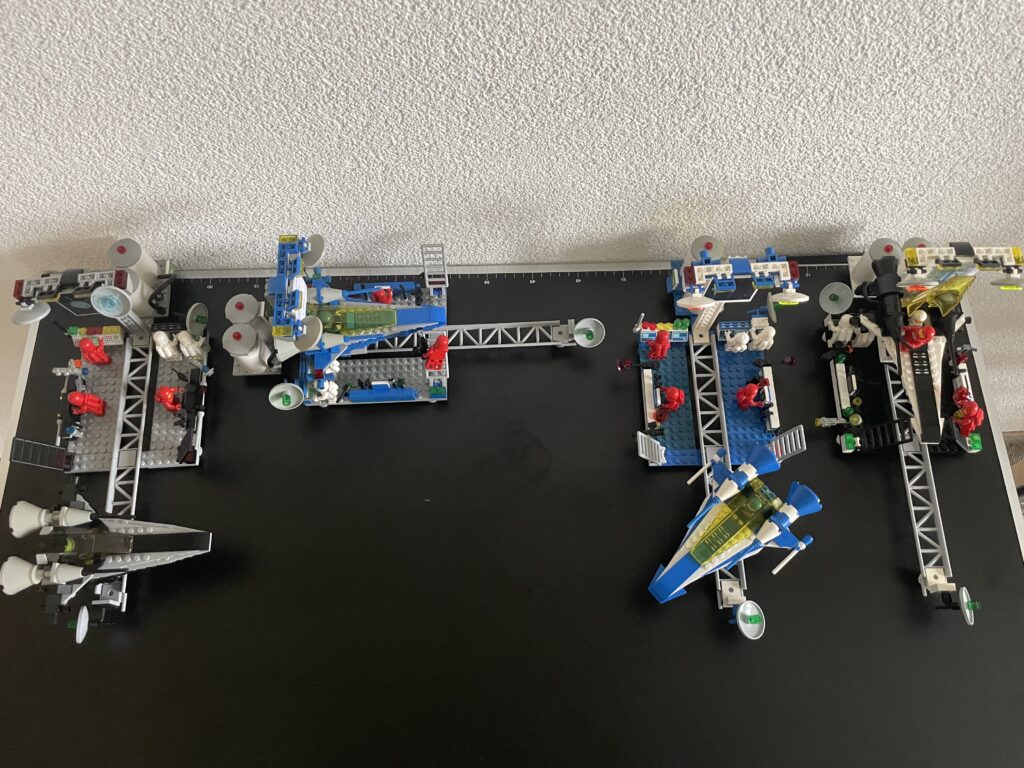
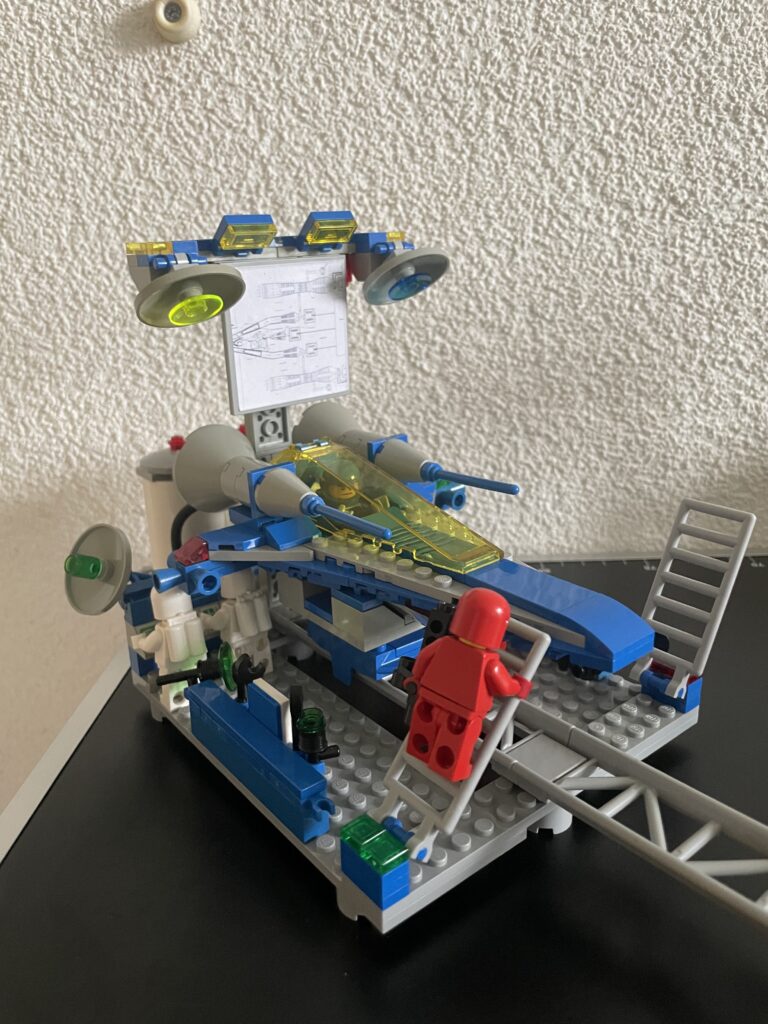
Each Team has a dedicated Garage or pit box, that is used for repair and maintenance after a race and for preparation for the next race. During a race, and if the course is plotted to pass by a specific location several times, the teams may also do pit stops for critical repairs or balance shifts (refuelling is not allowed during pit stops).
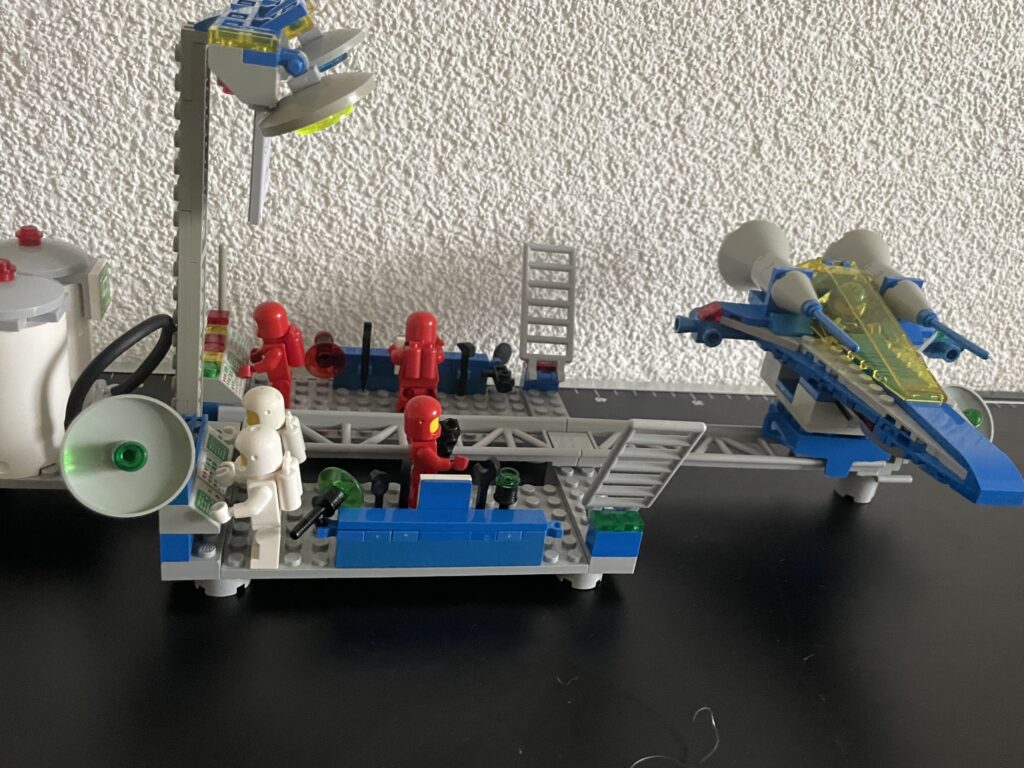
In case of a pit stop the race ship is landing on the pit platform (guided by the guide radar) and is be rolled back into the pit box as soon as it comes to a to s stop. Prevision landing and breaking is key for a fast and successful pit stop.
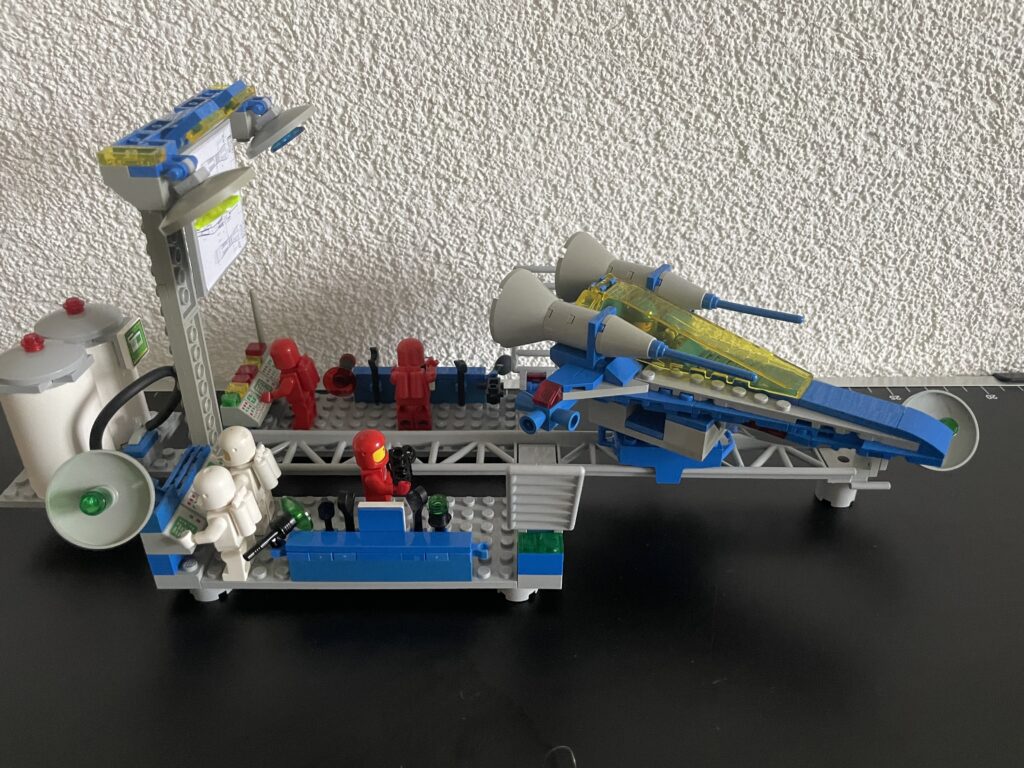
The same on the way out and while the landing platform rolls forward to the launch position, the pit platform itself is rotated to put the race ship back into the starting position.
Each Garage is equipped with a command station (the one with the tracking radar) and a repair station.
The NDI systems scans the race ship and repair tasks are passed to the individual consoles / gear stations, where the technicians get the last instruction for their tasks.
The large screen might either show technical info during repair/maintenance/preparation or race information during an ongoing competition.
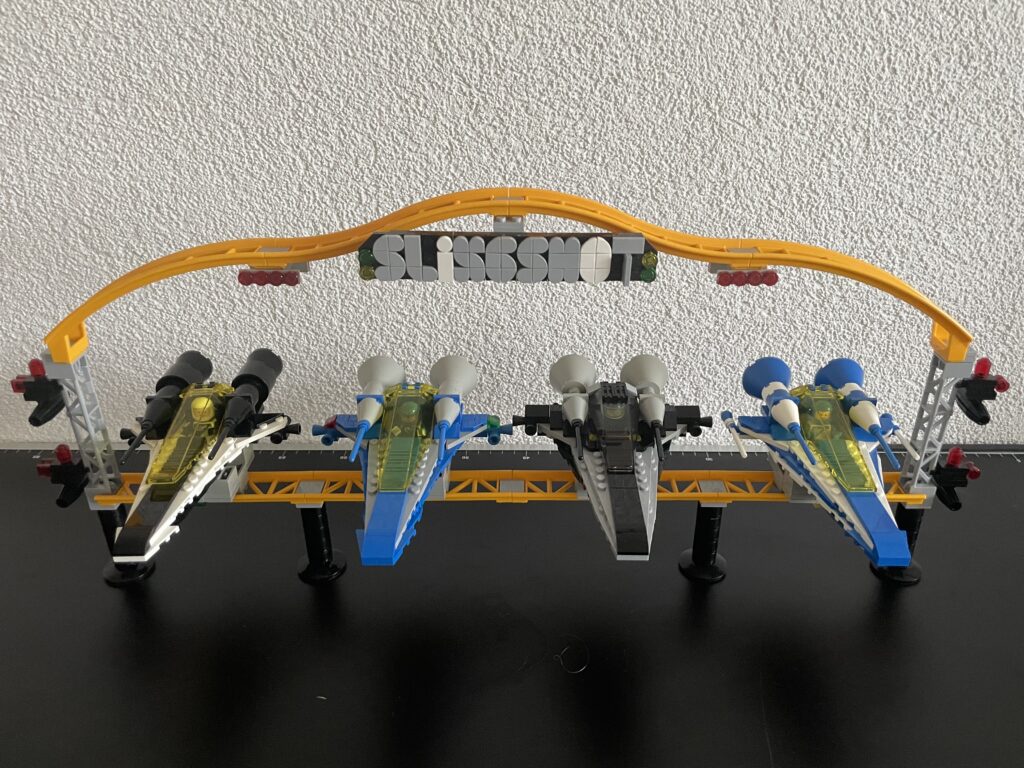
For each race, the race ships are lined up at the starting grid, which can either be on a surface or be out in space. Once all red lights are out, the race is on.
Race tactics are driven by balancing speed with fuel consumption, precise performance of the gravitational assists manoeuvre (leaving a planet’s orbit with only fraction degree of course can be costly if the course has to be correct to hit a registration point, especially if this is only reconized late …) but also determine the right path through the gravitational well, where possible acceleration has to be traded with g-forces breaking the ship / pilot, criticality of getting off course etc. Several times, a “slower” path has proven to be faster due to a ship missing mark of a fast path and having to perform costly course correction after the slingshot. Thus finding the right balance between a fast but risky or slower but more secure flight path, using the engines at the right time and right duration to accelerate is key to winning a race.
As the flight computer has limited compute power to support such precision, the pilot’s skill and the balance / capability of a race ship to keep course through a slingshot manoeuvre is essential. But also durability of the pilot and ship play a key role: depending on the course, races last several days, where pilots sleep in ships, pit crews have to manage ever changing strategies. Thus pit crew, pilots and ships are exhausted once a race is finished. Therefore the number of races is limited and we have about 1 race every (Earth) month.
In the middle of the 2373 season, we have currently the following race ships on the grid:
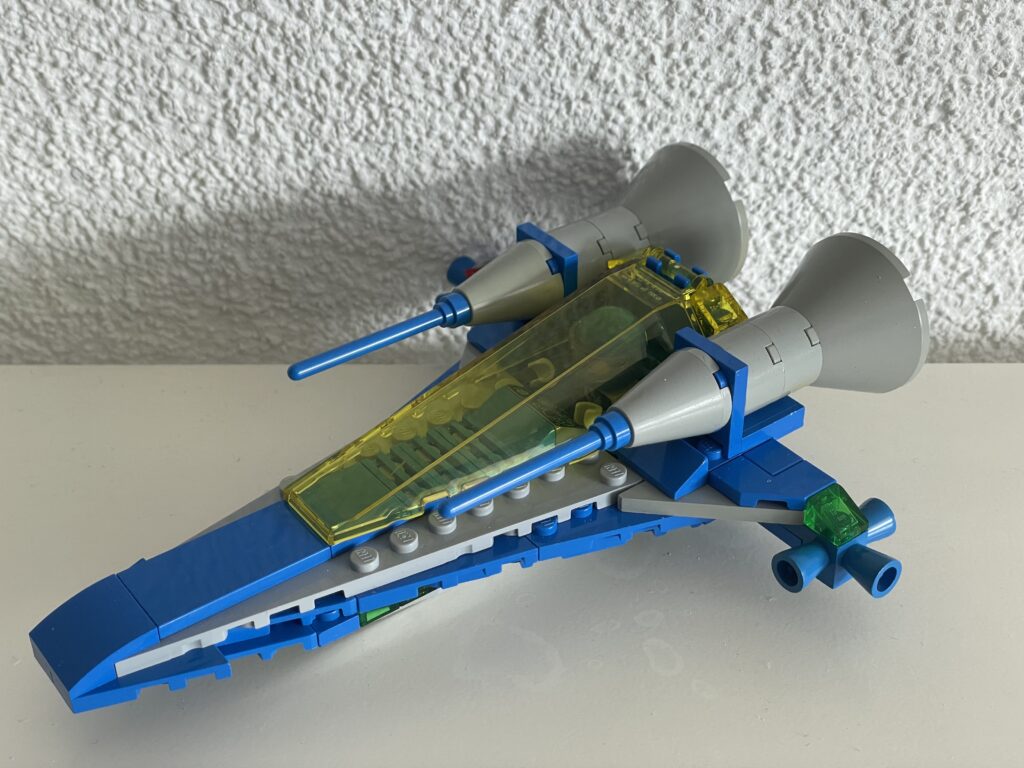
The SRL-BG-273 is the initial version of the race ship for the ’73 Season. It has won so far each race and therefore Team BG is careful with updates and still relays on the initial design for the upcoming races. However the gap is closing and ti has to be seen how long Team BG can keep the design.
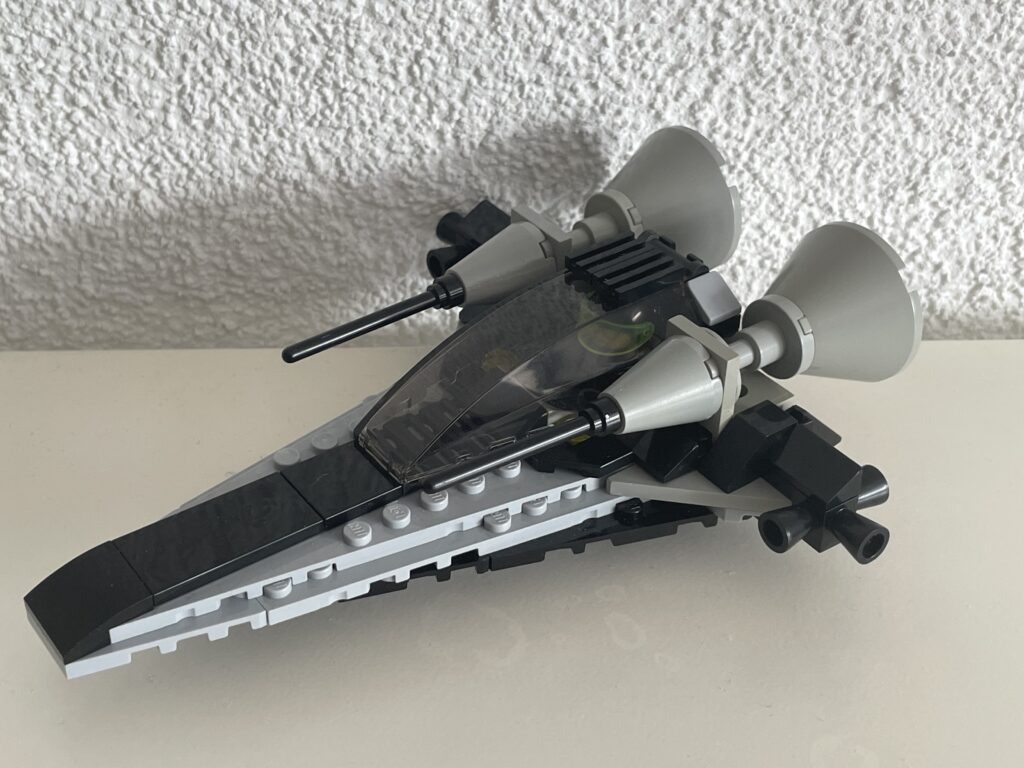
The SRL-GB-A73 is alpha version of the race ship for team GB of the ’73 Season. Team GB is struggling with the balance of the ship during gravitational “sling” that results in slower than expected exit speeds. The alpha version shall provide a first approach towards fixing the balance but the first race with this version has been not representative as an engine issue did not allow to fly full performance.
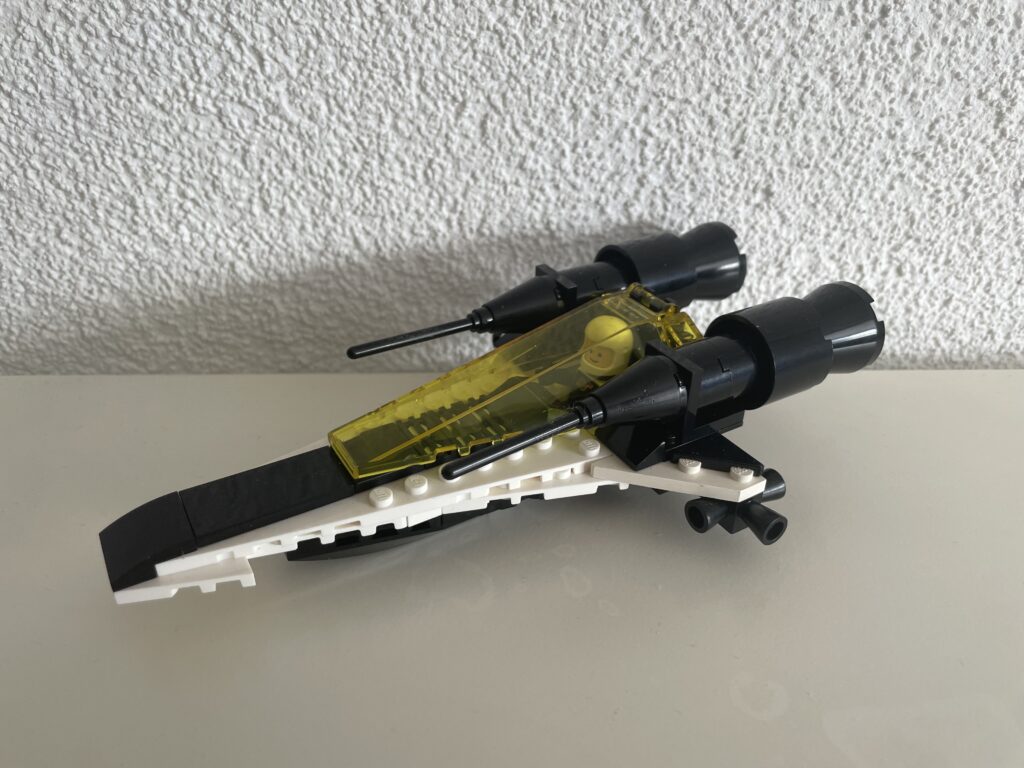
The SRL-BW-72V2 is based on the ’72 Season raceship, which was one of the most sucessful race ships ever built. Thus Team BW decided to built a V2 of that design. However this was been a desaster for them, so far no race has been won and instead of crusing to wins, they fight not being last.
The root cause is not clear but most likely the engine upgrade caused a major imbalance in the mass center that makes the ship flying like a brick on wings through the gravitational slings, causing the ship to get of course. This cost time and fusion power has to be wasted to bring the ship back on track; power that is missing in the final stretch to the finish line.
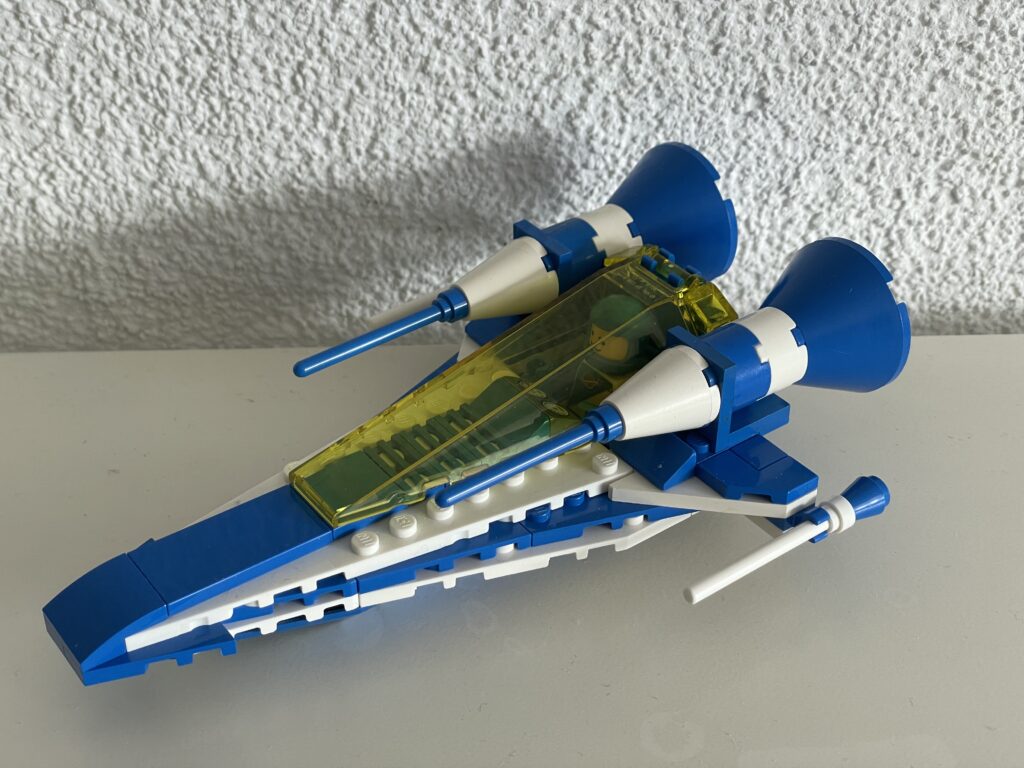
The SRL-WB-73-A2 is already the 2nd update of the alpha version, whereas the alpha version is a modifed design of the inital ’73 Season design.
This shows how Team WB has been struggling at the beginning of the season and has been rather at the end of the grid instead at the front. But the alpha base design has brought a first improvement and the 2nd update shows promise, Team WB thinks it can beat Team BG in the next races.
In the course of the season so far, everything seems to be heading towards a duel between Team BG and Team WB, the others are two away due to technical problems with their racing boats. We can all look forward to seeing how the season ends and who will end up as SLR champions!