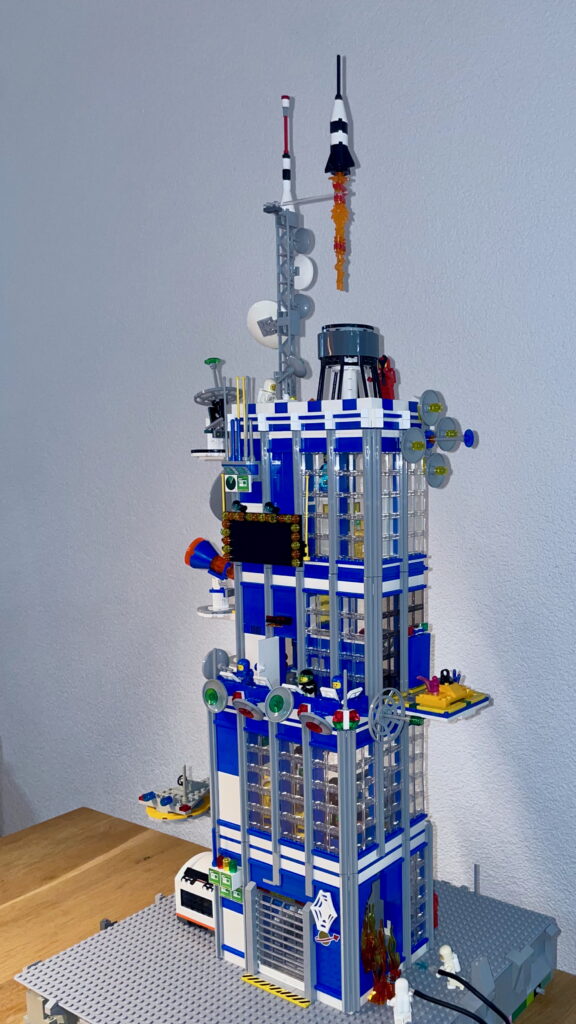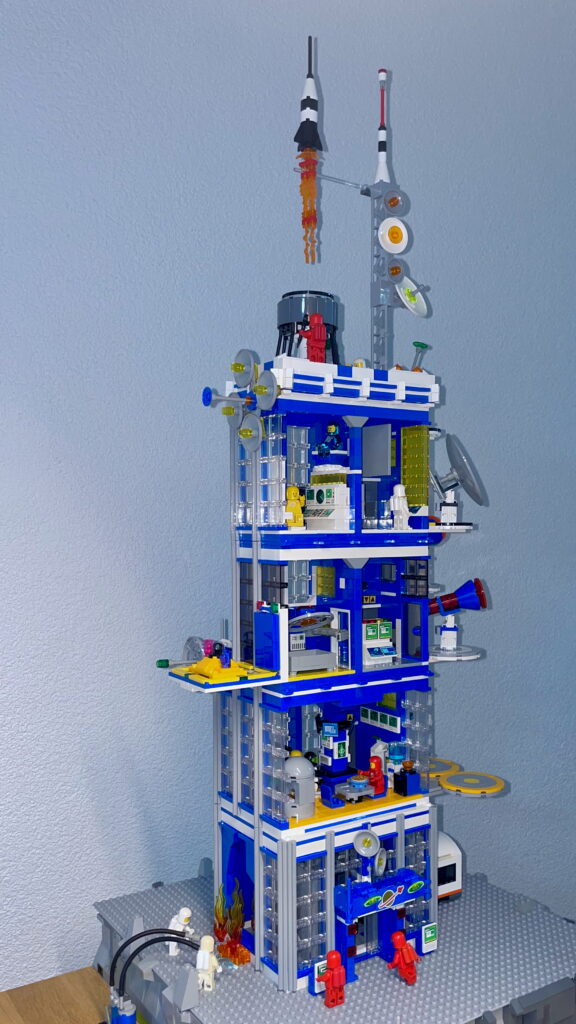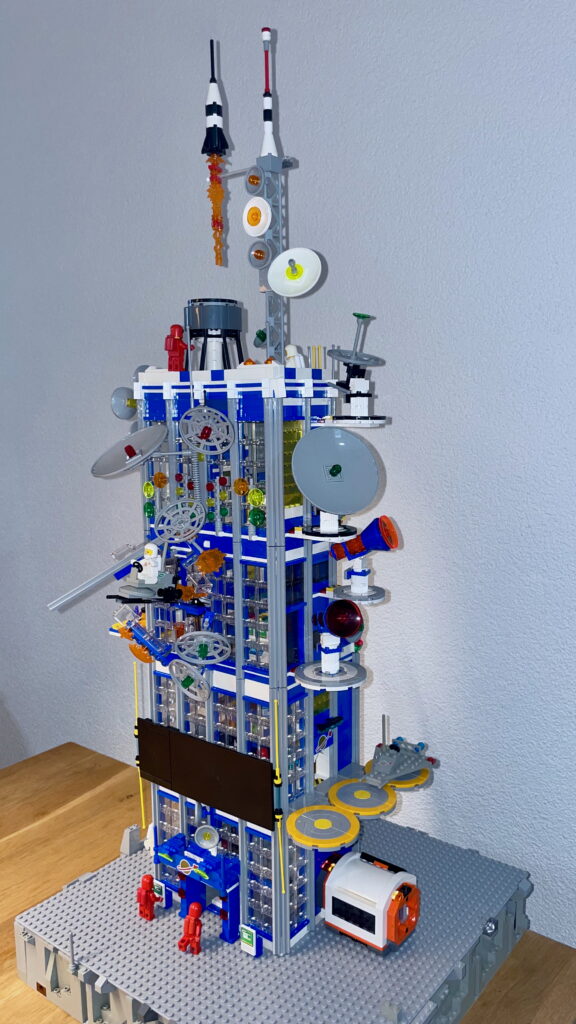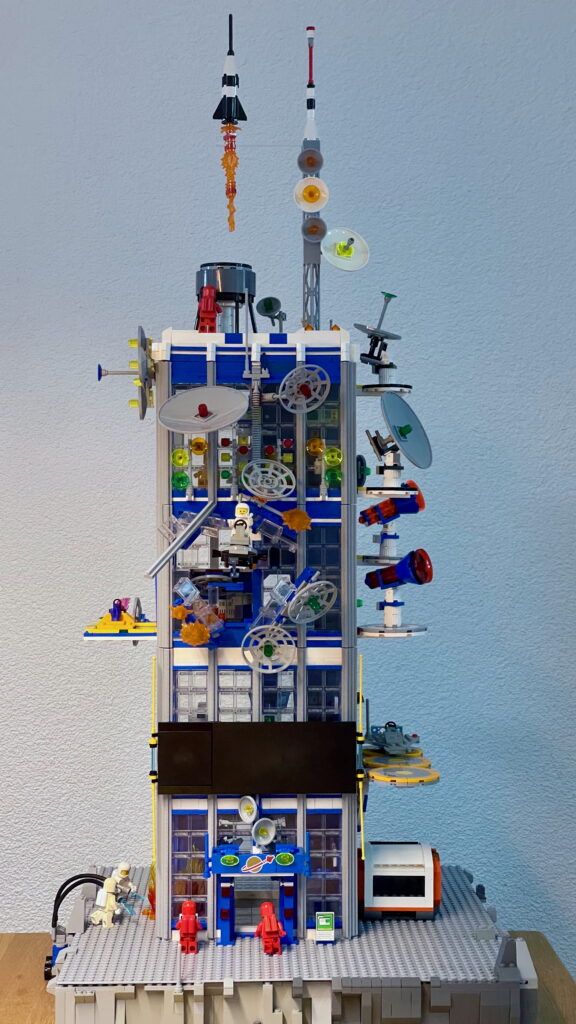
As always, when I build digitally first, I compare the real building with the digital design. I show where I made changes and why, how the building itself progressed, etc.
Parts procurement
The parts were procured using a combination of bricks in stock, Bricks bought at LEGO Pick-a-Brick, and Bricklink. The procurement process was as usual: 80% of the parts could be ordered without any problems, another 19% were difficult to obtain but available, and for 1% an alternative had to be found. This also applied to the StarTower.
But now let’s move on to the comparison.
Groundfloor – Entrance

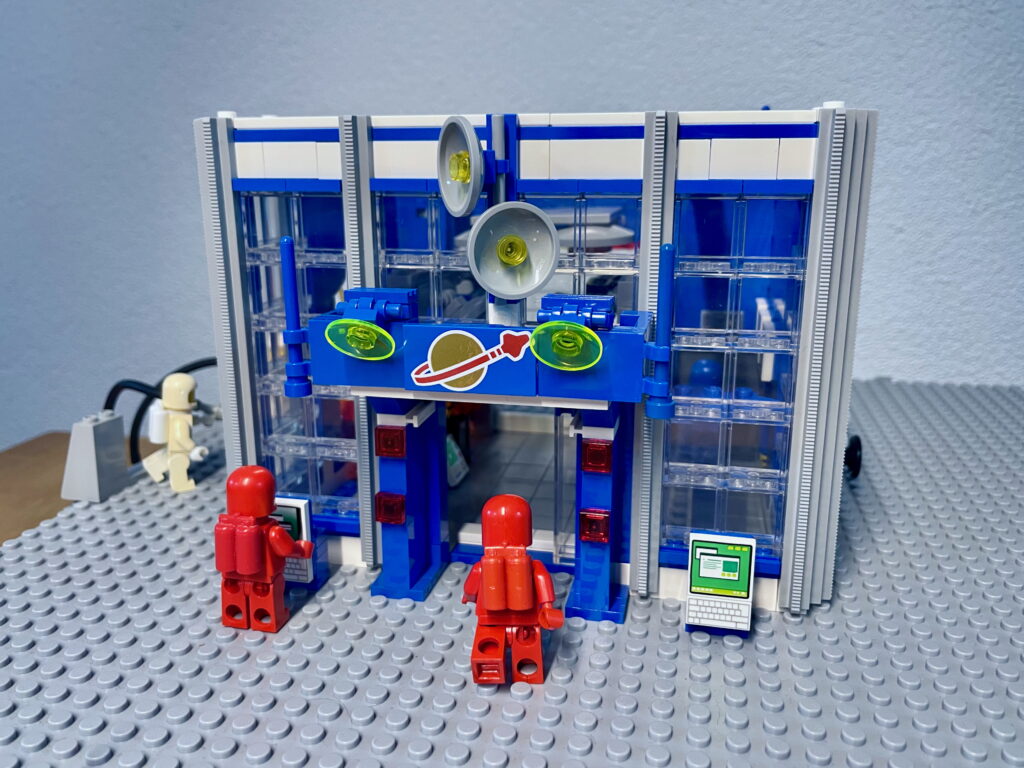
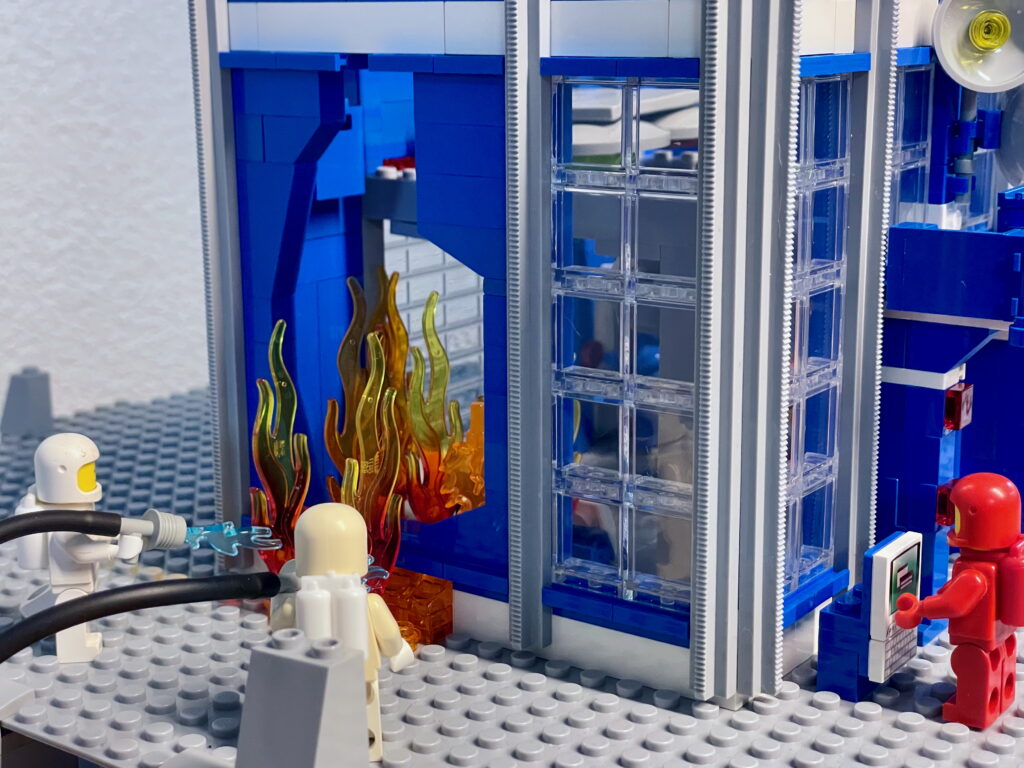
The entrance area corresponds almost exactly to the digital design, including the entrance terminals, scanners, etc. The fire also corresponds essentially to the digital design; the flames may be positioned slightly differently, but otherwise the implementation and the digital design are identical.

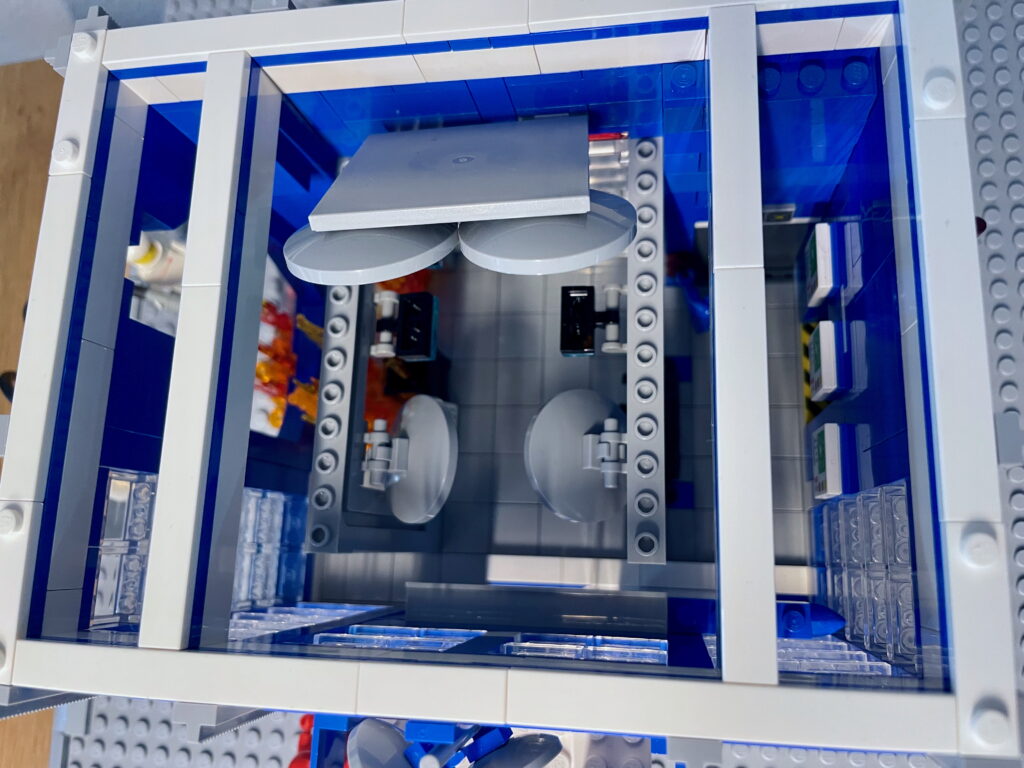

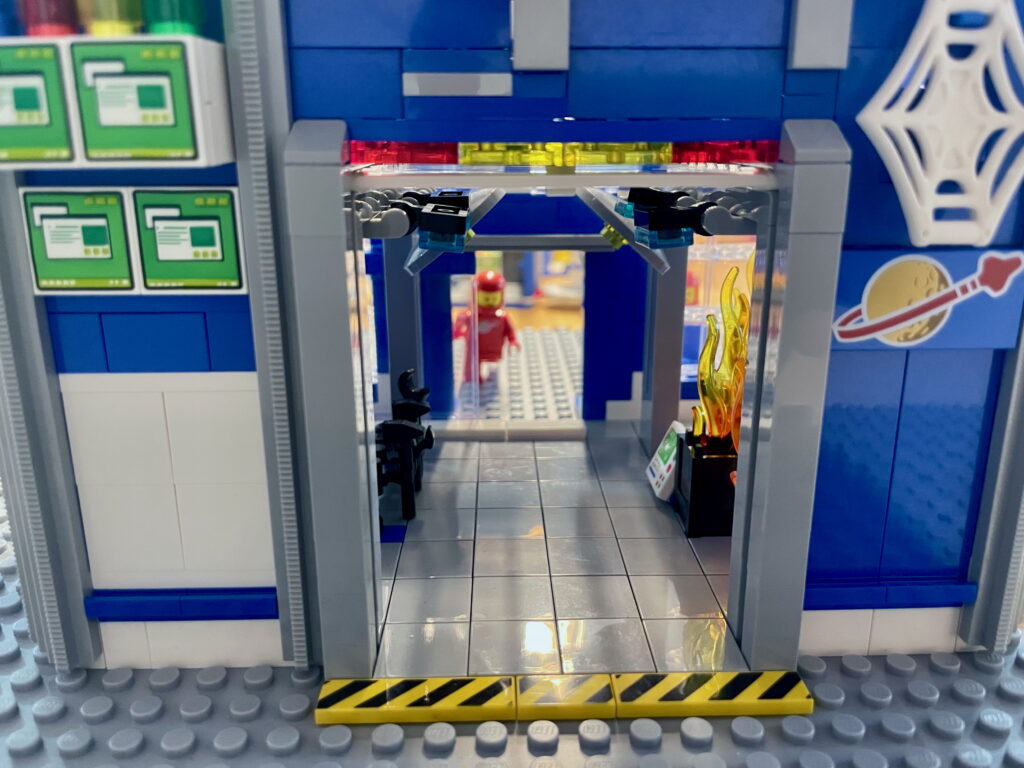
Inside, too, with the scaffolding, the scanner, the fire, and so on, the digital design and the real-life implementation match perfectly. The roller door also works flawlessly and can be easily raised and lowered.
Conclusion: On the ground floor, the real implementation and digital design match. Minor details, such as different colors for rods, etc., may have been changed to avoid spending a lot of money on rare components, but overall, the digital design was very well implemented.
1. Floor – Cantina

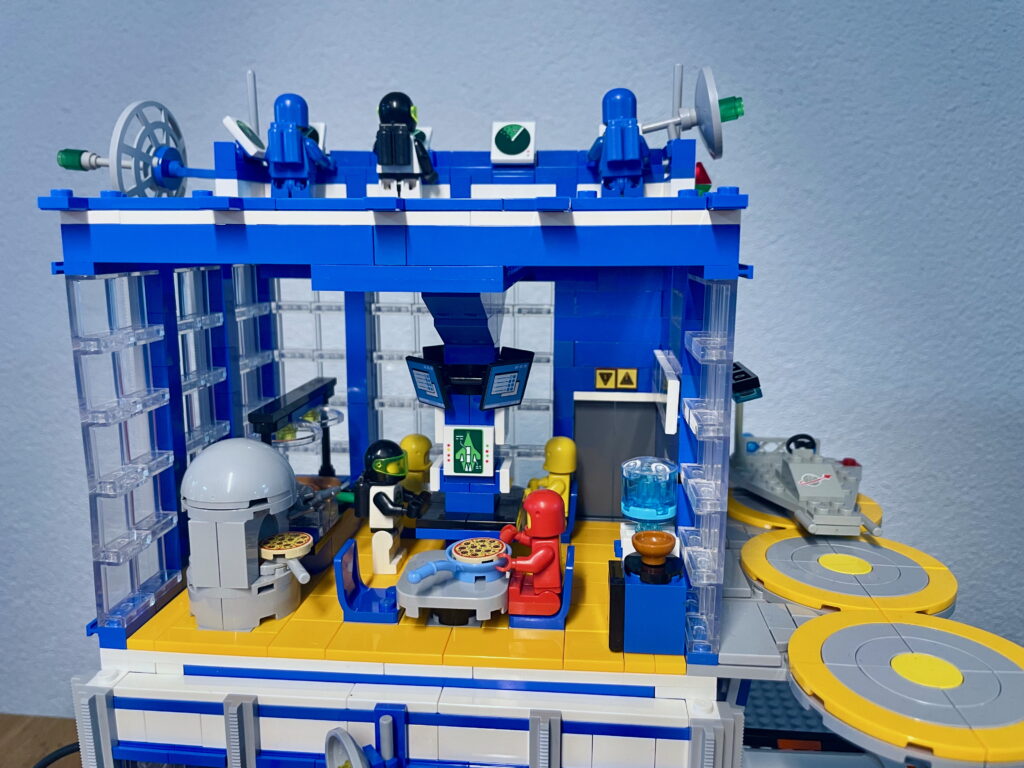
The implementation also worked perfectly for the cantina. There were minor adjustments to the tableware, but the pizza oven, salad bar, tables, and floor all worked out perfectly. The three landing platforms are also stable and can be used without any problems.
This shows that incorporating elements from other sets (e.g., the pizza oven and salad bar) proved to be a good idea, allowing me to rely on designs that work well.
2. Floor – Labs

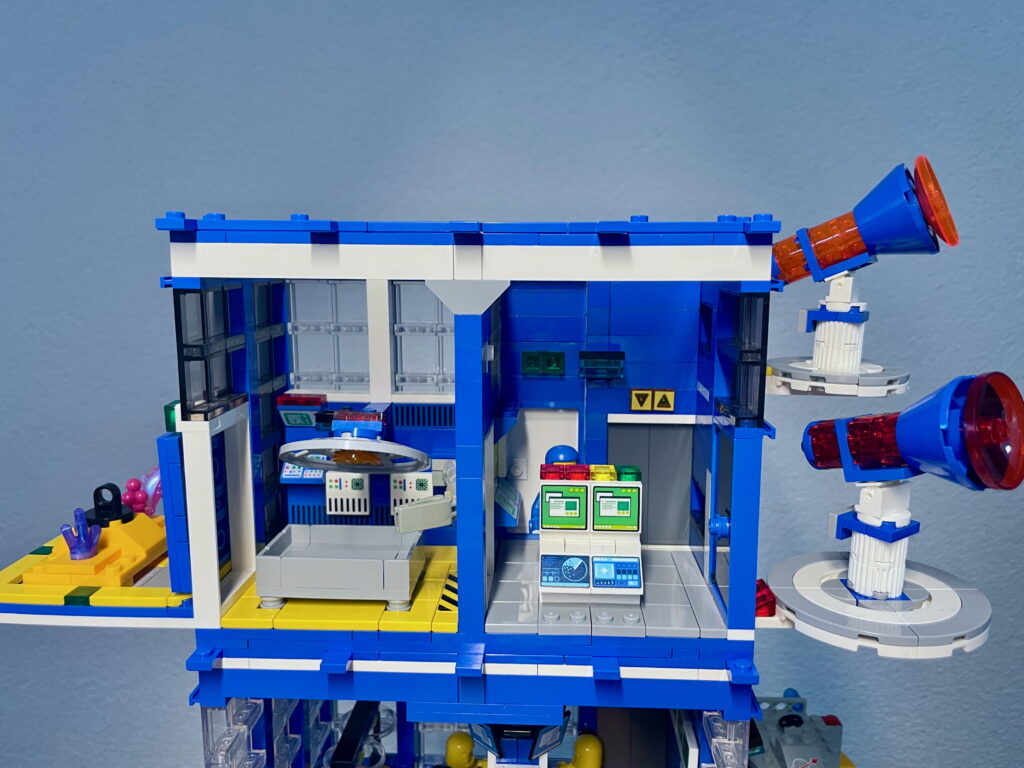
There was an adjustment made to the laboratory; the robot arm did not function as planned digitally, as there was simply not enough space. Therefore, this side of the laboratory was redesigned somewhat, and I omitted the second arm with the scanners entirely to provide space for handling, etc. Here, the digital design gives the impression of having more space than is actually available.

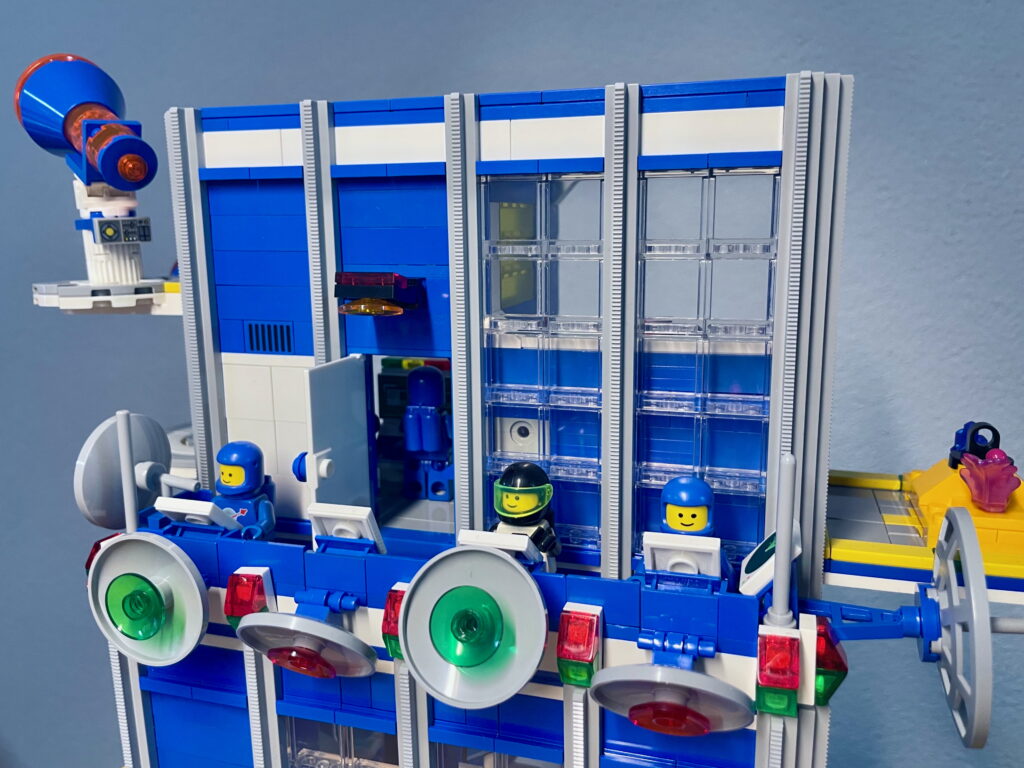
The balcony was also well implemented, and here too, the real and digital designs match.
The landing platform also worked very well on the second floor and is very stable. There were no problems during construction or later at exhibitions.
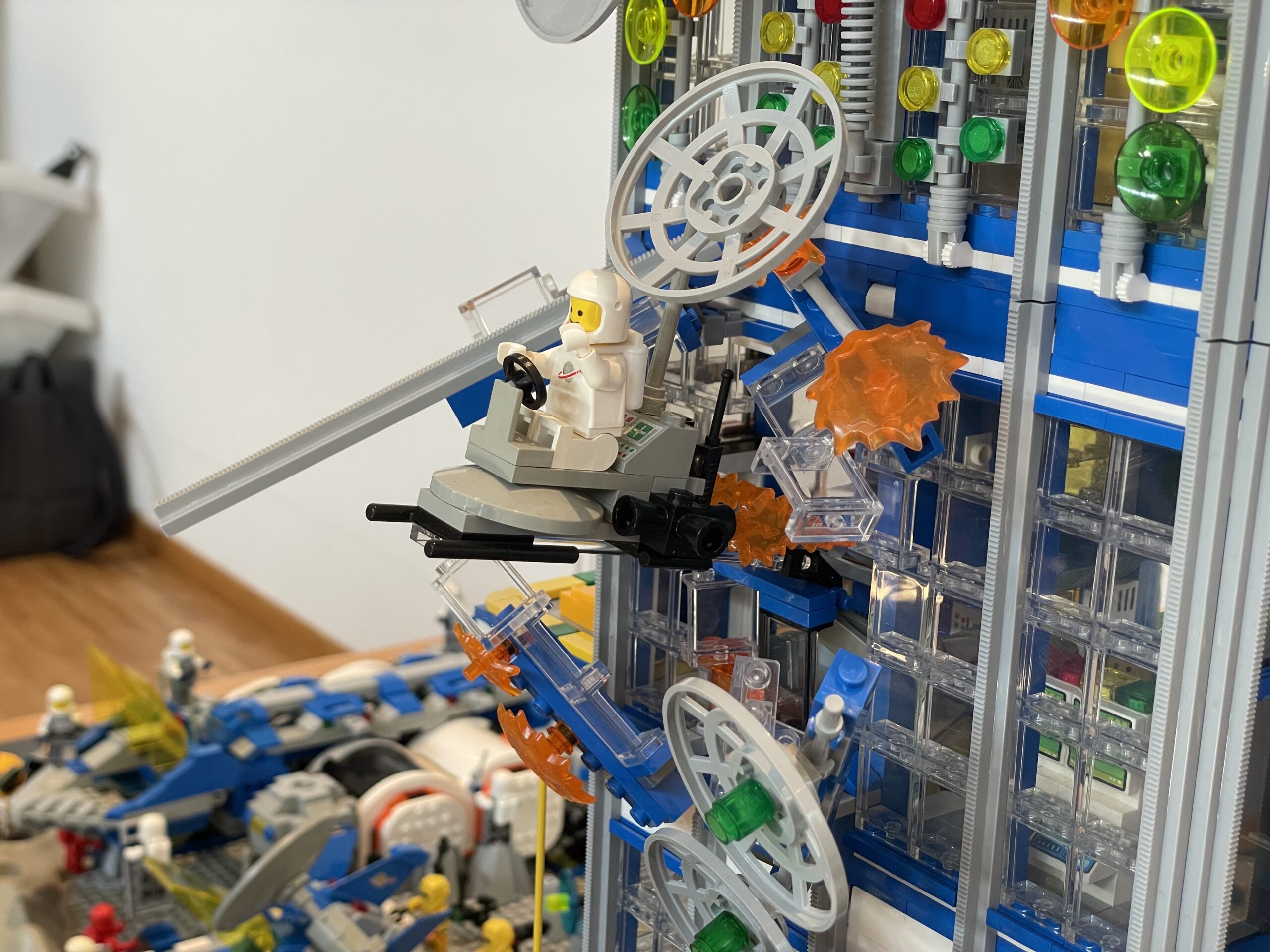
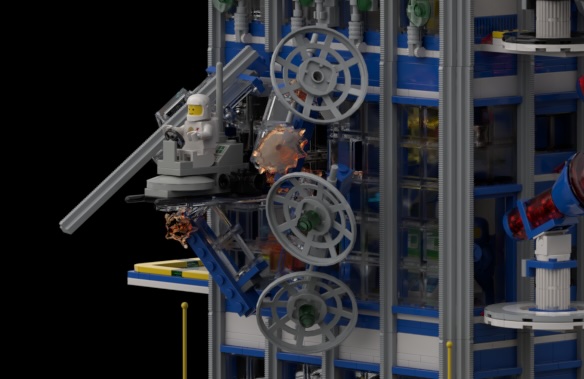
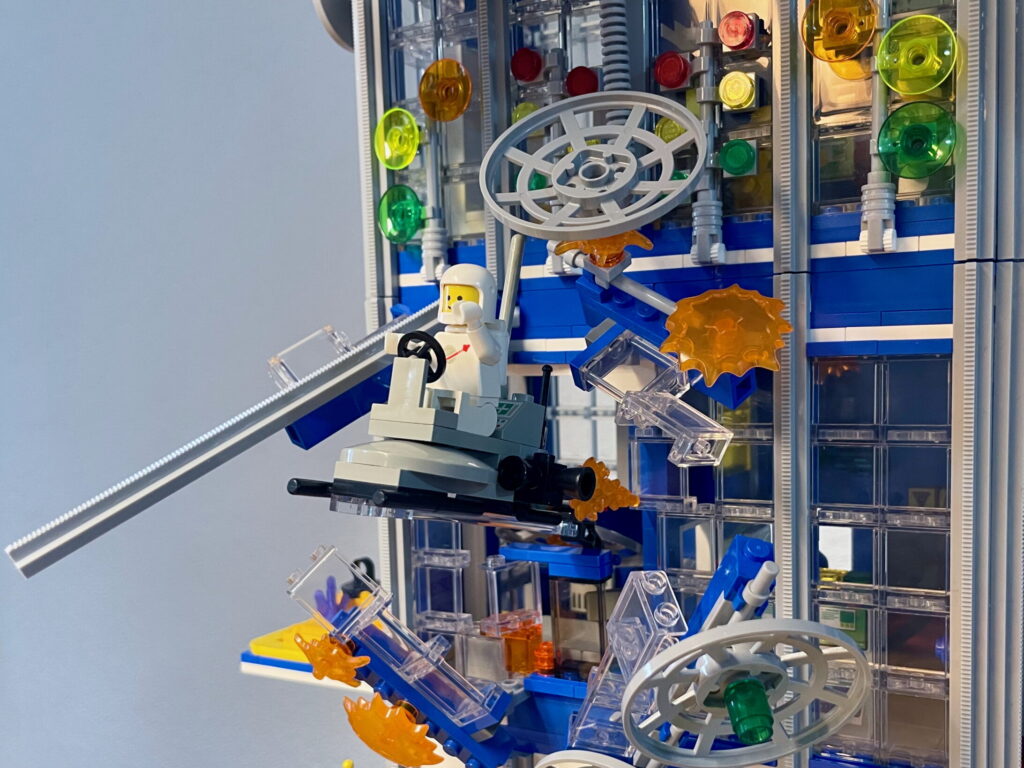
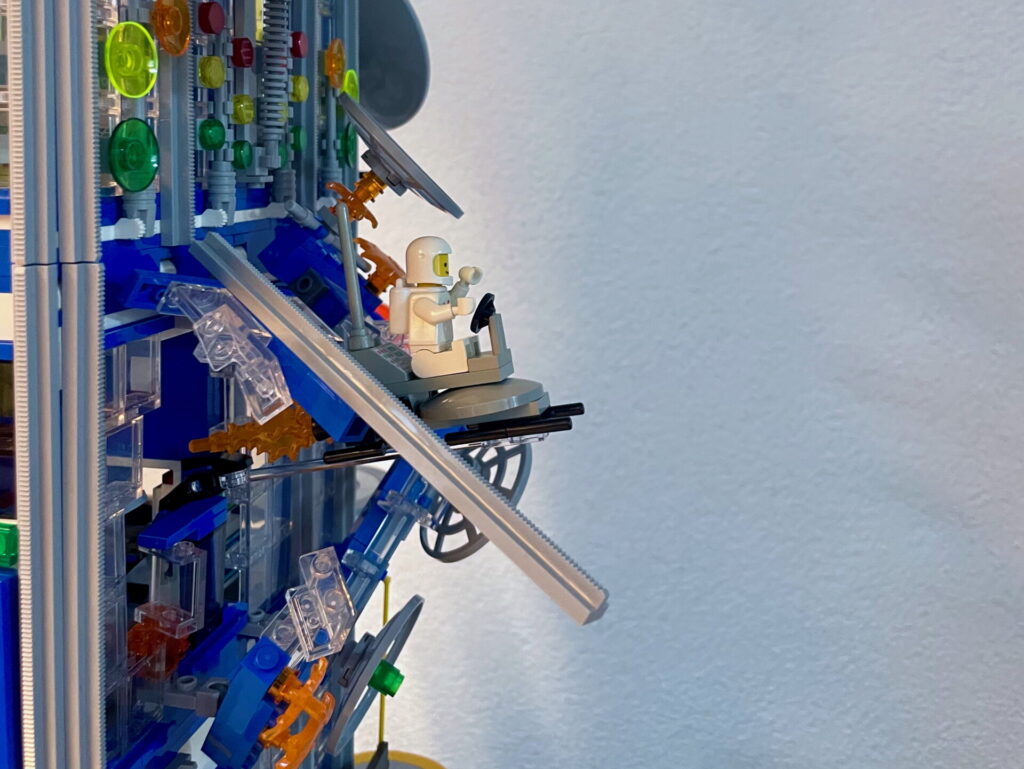
The “breakout” was also very well implemented in real life. I didn’t have to make any adjustments to the digital design, and the ball joints hold the flying facade struts very well. The “Daily Bugle” template helped to lay a solid foundation and make the whole thing stable. Concerns about a lack of stability were unfounded.
3. Floor – The Brain

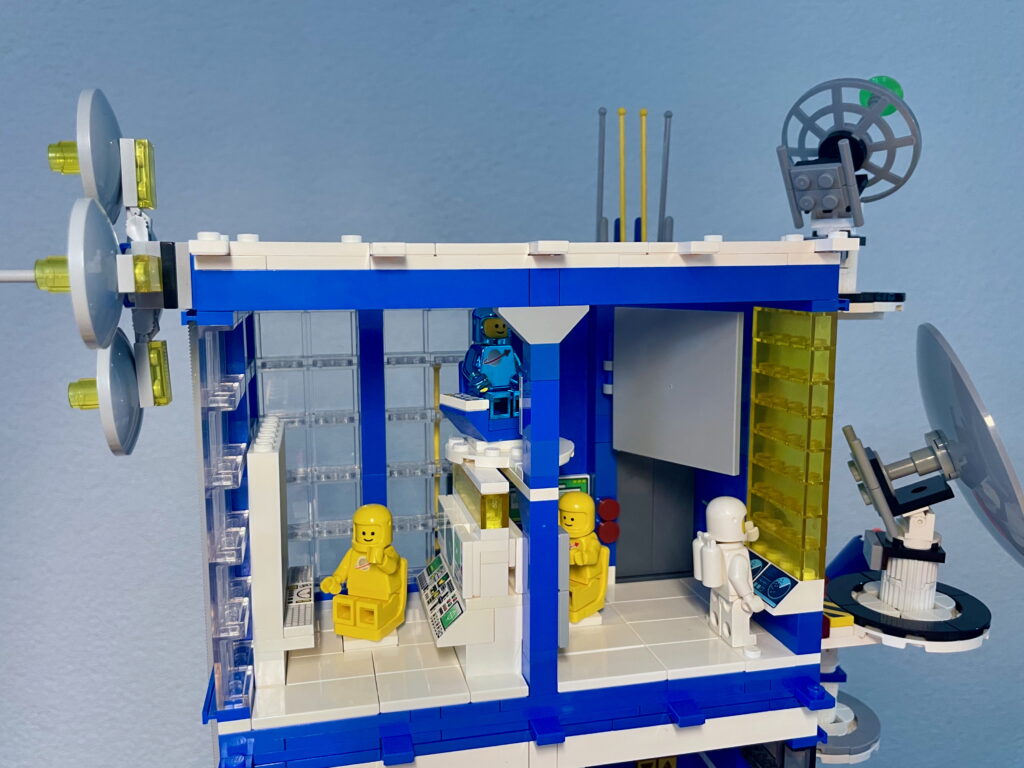
The third floor was also implemented in accordance with the digital design. The window side at the main antenna was modified, for design reasons I used 1 x 4 transparent yellow bricks to set the floor apart in terms of color and break up the very uniform façade. And in the end, I didn’t have enough windows either 😉

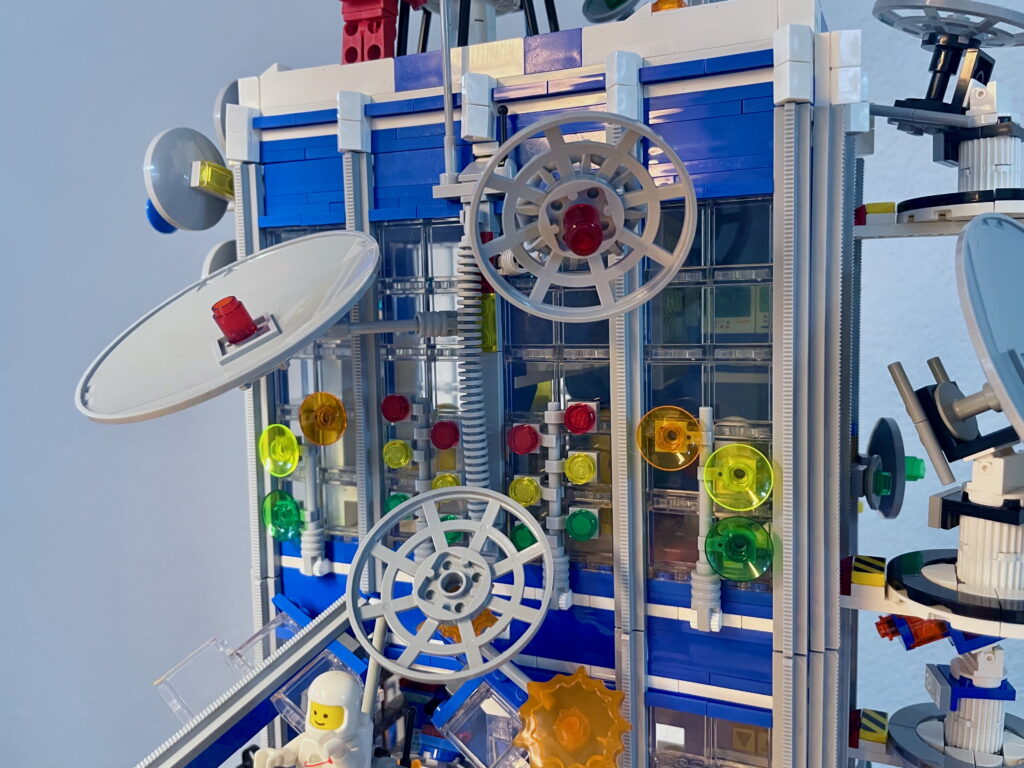
The antenna system on the rear could be implemented almost 1:1. In the photo, the facade looks slightly different because the antennas are pointing upwards. The design of the antenna mount works very well; the antennas are stable and can be aligned in many directions.
Rooftop – Communication and launch pad
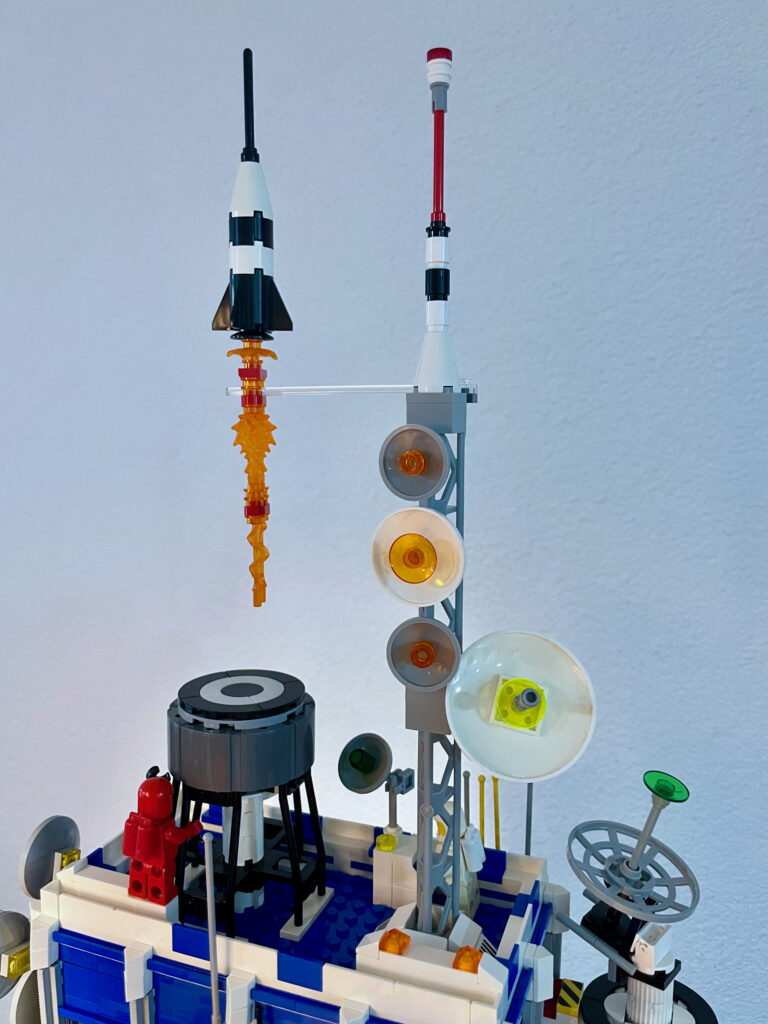
The roof with the communications system and launch pad could also be converted 1:1 into real construction techniques. The Daily Bugle helped me with this, especially for the rocket and the fire exhausts, which gave me a great basis for a proper design.

Conclusion
The actual implementation of the StarTower has remained fairly close to the digital design, which certainly speaks for the digital design, both in terms of the actual design and the implementation of construction techniques. The template, and the possibility of sticking to the template in important aspects while still making sufficient changes, certainly helped a lot. The “breakout” is the best example of this: the essential elements, such as the “flying” parts and their attachment, could remain the same, but instead of the green goblin, it became a moon buggy.
For this reason, I am very happy with the StarTower and it will certainly remain part of my MOC collection for a long time to come.